Sustainability has moved well beyond glossy commitments and annual reports. Today, it sits squarely at the intersection of strategy, regulation, competitiveness and trust.
Boards are expected to steer through accelerating regulation. Leadership teams are balancing sustainability ambitions with profitability, growth and geopolitical uncertainty. Communications teams are navigating scrutiny not just from regulators, but employees, investors, customers and civil society – all at once.
In short: sustainability is no longer a side topic. It is a leadership issue.
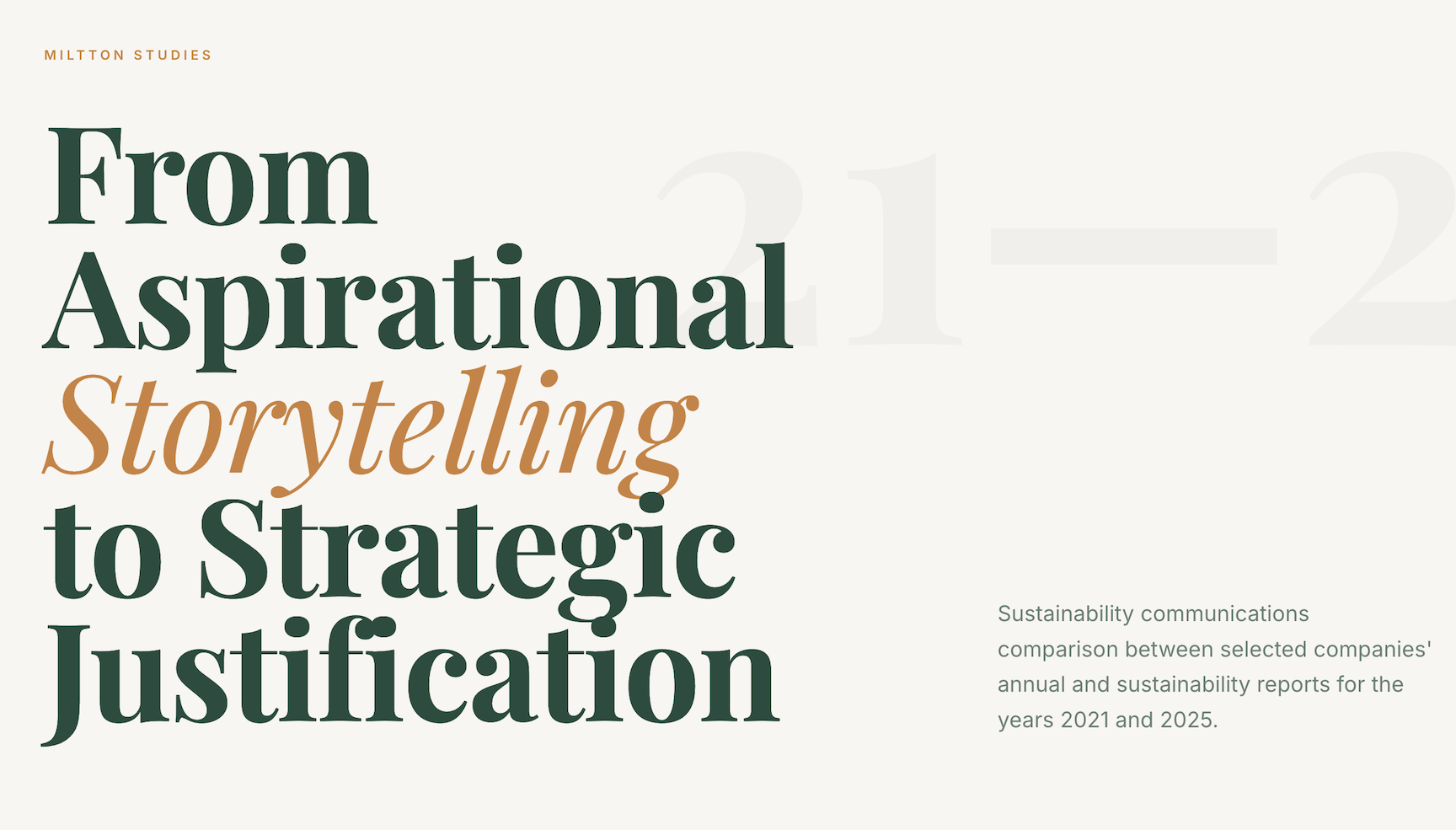
To better understand how sustainability is currently perceived, prioritized and acted upon in business, Miltton Sweden conducted a sustainability study. It’s a research-based look at how decision-makers view sustainability today, what they see as the biggest drivers and obstacles, and where tensions are emerging between regulation, strategy and everyday business.
Rather than treating sustainability as a purely technical exercise, the study looks at it as a management and value-creation challenge:
- How does sustainability influence strategic choices?
- What is seen as business-critical?
- Where is momentum building?
The findings are particularly timely as companies prepare for new reporting requirements, heightened expectations around transparency, and a growing demand to link sustainability more clearly to business outcomes.
For leaders, the question is no longer whether sustainability matters but how it is framed, governed and translated into action in a way that is both credible and commercially sound.