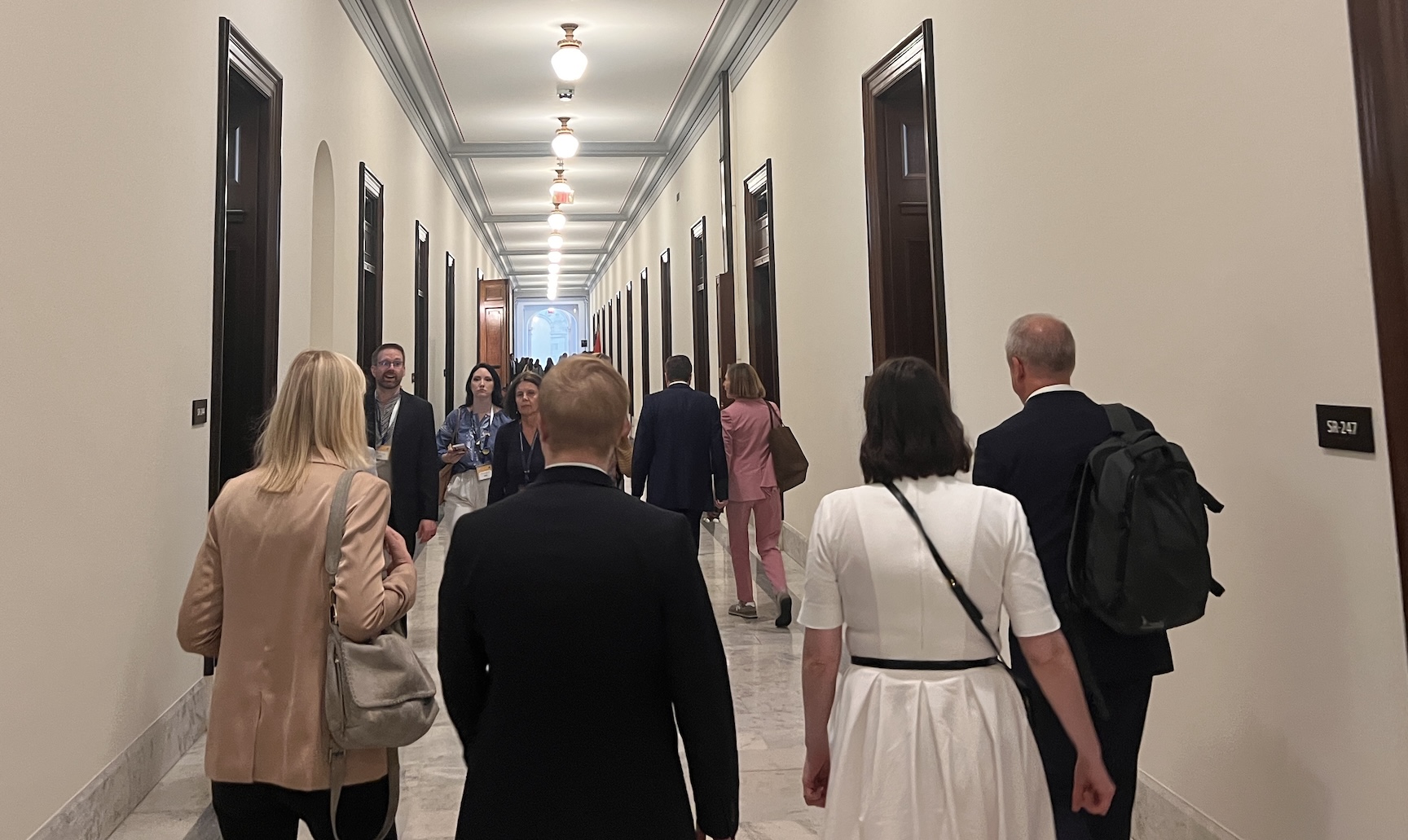
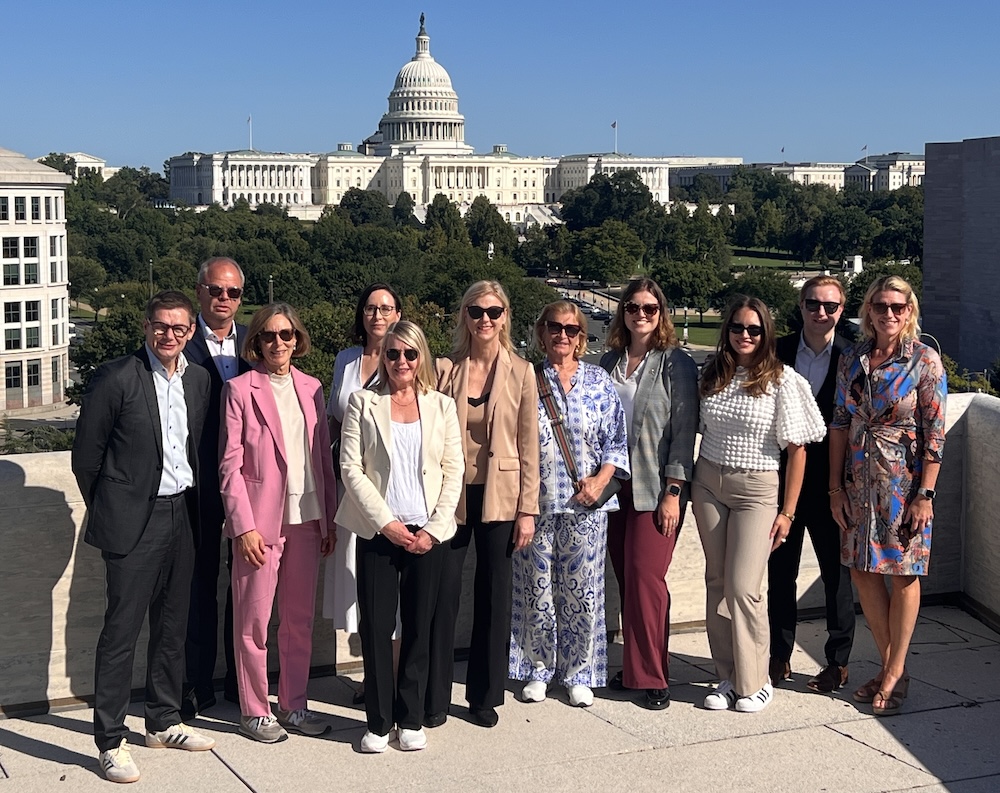
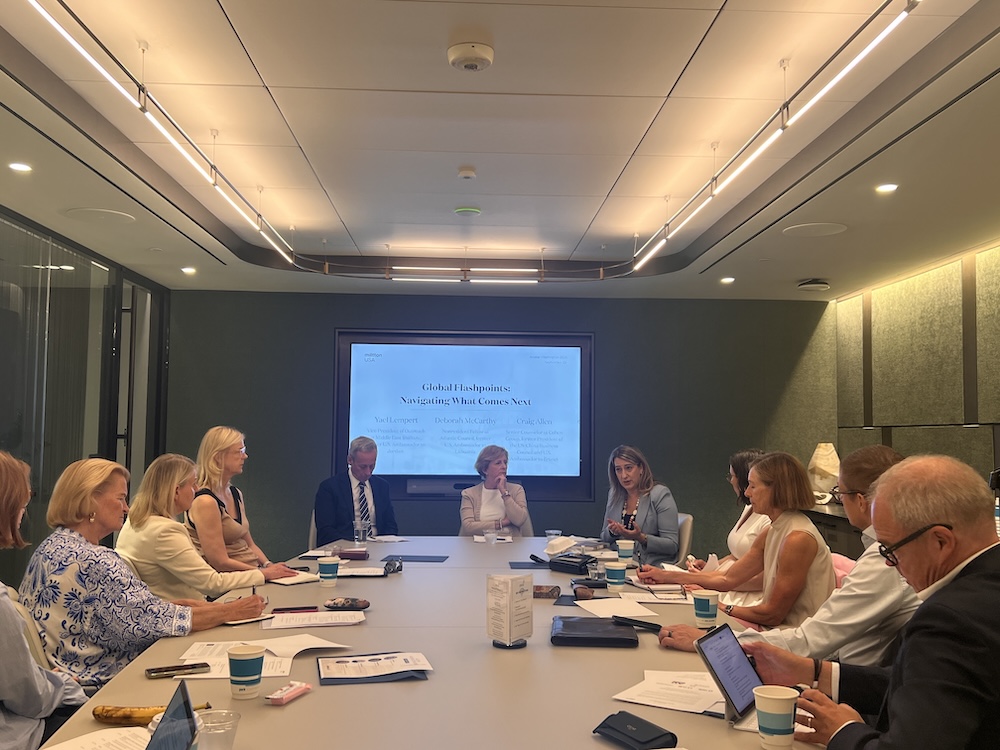
This year’s first fall program brought a delegation of Finnish and Swedish executives to DC (a Danish delegate very nearly joined too, more on that below). Over a few days, the group met dozens of people spanning business, politics, research, journalism, and lobbying. Here’s a few takeaways.
The small-state question
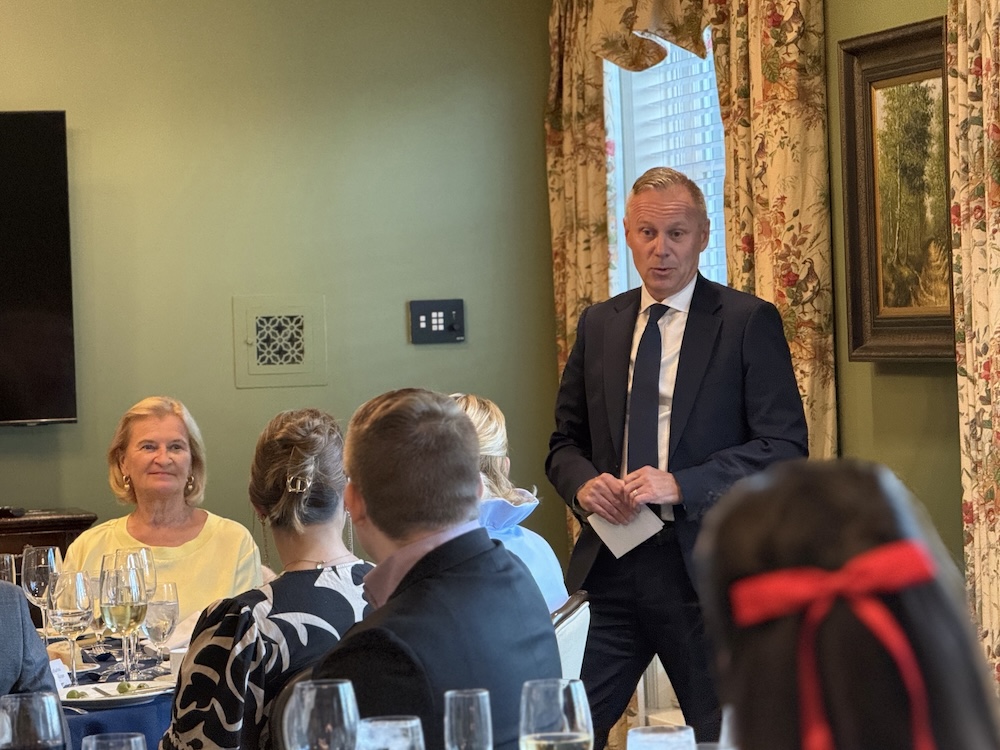
With the US and China locked in their own rivalry, where does that leave the world’s 120-plus small countries and territories – those with populations under 12 million? Could they act as a counterweight rather than get squeezed between the two giants? It’s a live question for a delegation from the Nordics, and one dinner speaker, investor Adnan Hassan, has gone as far as building an entirely new asset class around it.
What Canada shows about strategy
A visit to the Embassy of Canada surfaced a clear takeaway: Prime Minister Mark Carney’s cool-headed, methodical approach to Washington is widely admired here. Since the pandemic, Canada has run a deliberate review of its economic vulnerabilities and diversified its supply chains – officially framed not as a reaction to Trump-era tariffs, but as a longer-term strategic shift. For Nordic and Baltic leaders navigating their own exposure to US policy swings, it’s a useful case study in playing a long game rather than a reactive one.
Europe, newly interesting
For years, the EU absorbed pressure as a kind of punching bag between Beijing and Washington. The delegation’s conversations suggested that’s shifting: Europe finds itself unexpectedly in demand – and not only in the commercial sense.
The one that got away
The Speaker of the Danish Parliament had signed up for the program and was literally about to board his flight to Washington – then canceled at the last minute. The reason only became clear once the news broke: the Greenland deal.