22 Sep 2026 News

New Miltton study: sustainability leaders are no longer about the why, they’re showing how

A new Miltton study reveals a significant shift in how the world’s leading sustainability executives communicate. While sustainability narratives once focused on commitments and ambition, they are increasingly centred on action, implementation and measurable impact.

Share

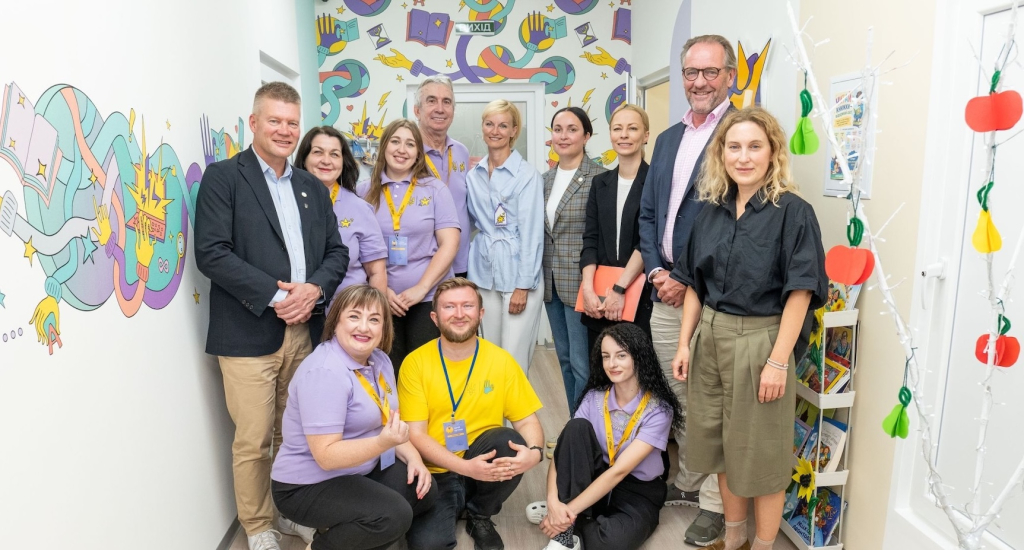
The findings were unveiled during NYC Climate Week at an event hosted by Miltton and UN Global Compact Finland, bringing together sustainability leaders, business executives and stakeholders to discuss the future of sustainability and value creation.

Miltton’s study, The Evolving Language of Sustainability and Climate, analyzed 8,015 LinkedIn posts published between January 2025 and August 2026 by 227 Chief Sustainability Officers representing 224 of the largest companies in Europe and the United States. The research compares sustainability communications during the first half of 2026 with the same period in 2025.


From “why” to “how”

One of the clearest trends emerging from the research is a shift from aspirational language to operational language.

In 2025, sustainability leaders often communicated through the lens of commitments, strategy and future ambitions, explaining why sustainability matters and where organizations were headed. By 2026, the focus had shifted toward execution, business impact and concrete action.

“This is what we are doing, and this is what we have delivered” has become one of the defining narratives in sustainability communications.

In fact, posts built around concrete actions and demonstrated outcomes now account for 35 percent of all sustainability-related communications in the dataset, representing a 17 percent increase compared to the first half of 2025.

“The findings suggest that sustainability is increasingly being framed as a business capability rather than a business aspiration,” says Eeva Taimisto, Director, Sustainability Consulting and Communications at Miltton.

Resilience is emerging as sustainability’s new keyword

The study also shows that resilience is rapidly becoming one of the most important concepts in sustainability communications.

Across the entire dataset, references to resilience increased by 42 percent between 2025 and 2026. The increase was particularly strong in Europe, where mentions grew by 64 percent, compared to 20 percent in the United States.

As businesses face geopolitical uncertainty, climate-related risks, economic volatility and supply chain disruptions, resilience appears to provide a framework that connects sustainability with competitiveness, preparedness and long-term business performance.

“This isn’t just a change in terminology. The rise of resilience reflects how companies increasingly link sustainability to business continuity and strategic advantage,” says Taimisto.

Europe and the US are talking about climate differently

While the overall sustainability agenda remains global, the study identified clear differences in how climate issues are framed on opposite sides of the Atlantic.

In Europe, climate change is increasingly discussed as a systemic transition challenge. Conversations frequently focus on regulation, competitiveness, biodiversity, nature-related risks and the financial implications of the green transition.

In the United States, climate narratives are more likely to emphasize practical solutions and tangible outcomes. Topics such as innovation, AI, energy efficiency, supply chain resilience, water management and support for local communities feature prominently in communications.

These differences illustrate how sustainability messaging is becoming increasingly shaped by local political, economic and societal contexts.

Anticipating the next shift

For organizations, changes in language can be early indicators of broader shifts in stakeholder expectations.

By combining AI-assisted analysis and sustainability expertise, Miltton’s research helps organizations understand not only how narratives are changing today, but also where expectations may be heading next.

“The language of sustainability is evolving rapidly. Organizations that understand these shifts will be better positioned to build credibility, relevance and trust among their stakeholders,” says Taimisto.

The study The evolving language of sustainability and climate

The study was launched during NYC Climate Week. Find out more by reaching out to our experts.

Read more

If you got interested, let’s talk more!

Eeva Taimisto

Director, sustainability consulting and communications Miltton Finland +358 401 723 832 eeva.taimisto@miltton.com